
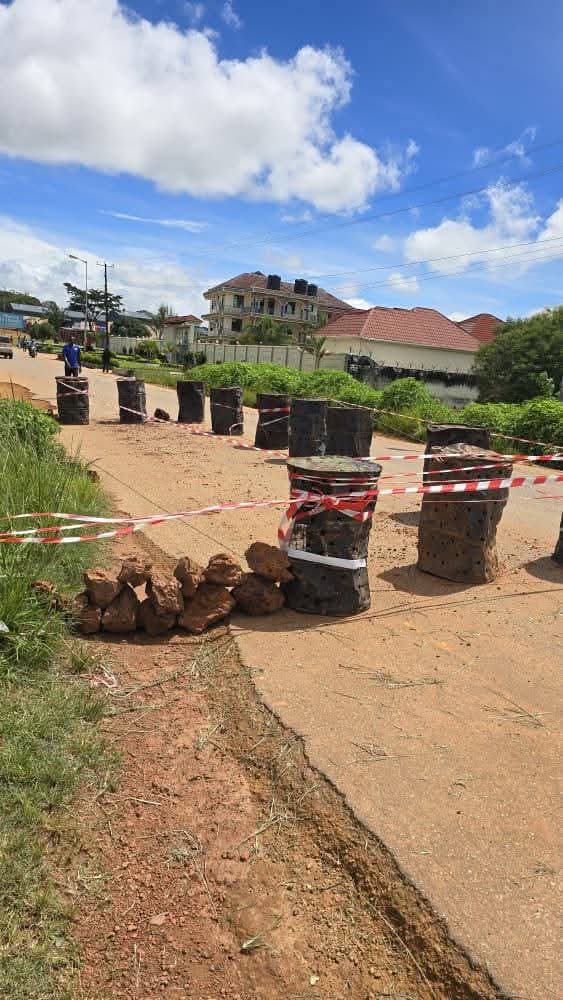
A concerned Kasama Resident has expressed worry over the poor state of Roads within the District, urging authorities to urgently look into the matter. Speaking to Kasama Radio news, Pethias Mwamba laments the need for Government to urgently rehabilitate dilapidated roads in Northern Province, warning that the current state of infrastructure is undermining economic activity and public safety. “With the government’s push towards a 24-hour economy, it is critical that roads are in good condition to support continuous movement of goods and people, especially at night” he noted. Mr. Mwamba says the poor state of many roads in the province poses a serious risk to motorists and hinders business operations. He further examines the effectiveness of toll gates, which were introduced to raise funds for road maintenance and rehabilitation. ” I am truly concerned because despite motorists paying levies at various toll points, many roads remain in a deplorable condition which needs to be looked into” Mr. Mwamba stated. His appeal comes amid growing concerns from residents and transporters who have continued to call for improved road infrastructure to enhance connectivity and support economic growth in the region. Ends……… #Kasamaradio.

CWSSC WORKERS ON STRIKE OVER UNPAID 3 MONTHS SALARY.
Frustrated workers at Chambeshi Water Supply and Sanitation Company (CWSSC) in Kasama District have gone on strike, claiming that the company has not paid their salaries for the past three months. The workers say the situation has made it difficult for them to effectively carry out their duties. Speaking to Kasama Radio News this morning during a peaceful strike demostration, the workers complained that they are struggling to make ends meet as the company has not cleared their salaries for the last three months, which is December, January and February. “We are demanding for immediate action from the company and equally calling on the government to urgently intervene in the matter, ” the workers lamented. The workers have further stated that they will not report for work until a meeting is held with management to provide a clear way forward. Meanwhile, the workers have also raised concerns over deductions appearing on their payslips for National Health Insurance Management Authority (NHIMA) and National Pension Scheme Authority (NAPSA). “We are unable to access services because the contributions are allegedly not reflecting in the systems with NHIMA and NAPSA,” they disclosed. The workers highlighted that the issue has continued to cause concern among employees, who are now demanding clarification and immediate action. Some workers have also told Kasama Radio News that management has allegedly directed them not to report for work until further notice, a development they say is worrying and requires urgent explanation. In response, Eng. Jose Chamanika, Managing Director of Chambeshi Water Supply and Sanitation Company, acknowledged the workers’ concerns and assured them that measures have been introduced to address their grievances with the urgency they deserve. Eng. Chamanika attributed the delay in paying salaries to operational challenges the company is currently facing. “The cost of producing water is higher than the revenue generated from water sales, making it difficult for the company to sustain its operations,” he explained. He has since called on the workers refrain from shut down water plants, warning that such actions would have serious repercussions on communities, as water is an essential service. End……
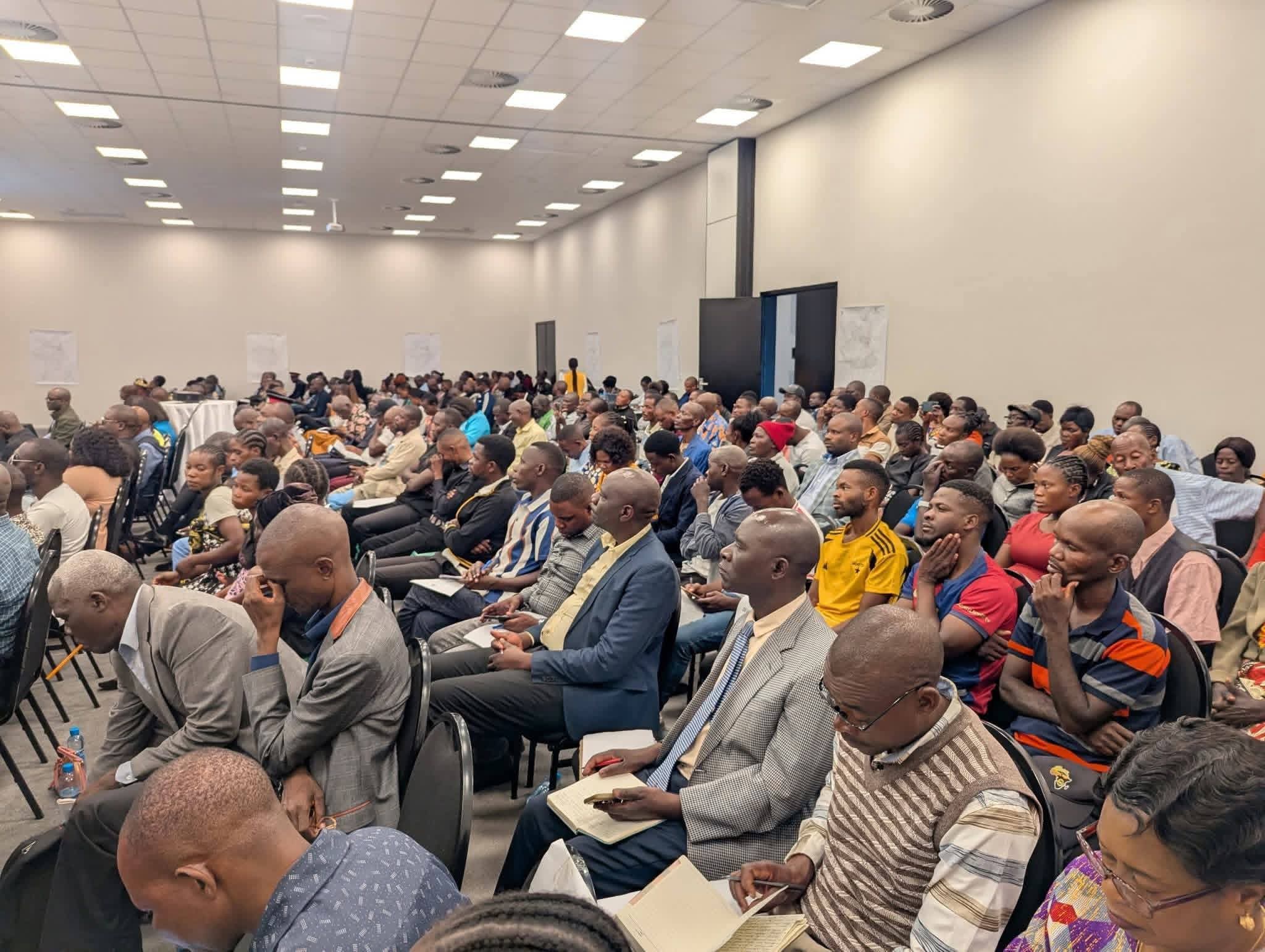
KASAMA DISTRICT COMMENCE DELIMITATION SITTINGS.
Kasama District has today launched its delimitation exercise, a significant national process being conducted by the Electoral Commission of Zambia (ECZ) across the country. The sitting is taking place at the Kasama District Urban Hotel, with various stakeholders from all over the country in attendance. The stakeholders include civil society organizations, faith-based groups, and representatives from political parties. This exercise is part of a nationwide initiative being held in all 116 districts of Zambia to receive submissions from stakeholders and deliberate on the delimitation of constituencies. Speaking at the opening of the delimitation sitting in Kasama this morning, Kasama District Electoral Officer, Innocent Mutambo, emphasized the importance of the exercise, stating that it is a crucial component of a credible electoral process. “This exercise ensures fair, equitable representation, reflecting changes in population distribution and settlement patterns, ” Mr. Mutambo stressed. He added that the process will help strengthen democracy and uphold the principle of equal representation for all citizens. Mr Mutambo further urged participants to actively engage during the meeting, providing data driven input and ensuring transparency and inclusivity. “The delimitation exercise, as stipulated by the Constitution, will be completed, and the new constituencies will be published in the gazette, taking effect on May 15, 2026, when Parliament is dissolved,” he disclosed. The legal foundation for the exercise arises from the Constitution of Zambia Amendment Act No. 13 of 2025, which introduced significant reforms to the electoral system. Among these key reforms is the delimitation of constituencies and the introduction of the mixed-member proportional representation system. The amendment has increased the number of constituency-based seats in the National Assembly from 156 to 226, creating an additional 70 constituencies. End…….
Local News
MAAMBA Solar Energy Limited has launched the construction of a 100 megawatt (MW) solar power plant in Maamba, Southern Province, Zambia. MAAMBA Solar Energy Limited has launched the construction of a 100 megawatt (MW) solar power plant in Maamba, Southern Province, in what the government has described as a “game-changing” step towards ending the power crisis and advancing Zambia’s climate and energy goals. This is according to a press statement issued by Langmead & Baker Ltd. The project was officially launched by the Minister of Energy, Hon. Makozo Chikote, MP, on 22nd September at a groundbreaking ceremony attended by government officials, investors, community leaders and residents. “Maamba Solar Energy Limited have responded to the vision, to restore the stability in the energy sector and improve our energy mix,” said Hon Minister Chikote. “Zambia depended so much on hydro and when this drought hit us, this administration, when it took over, was able to think outside the box. We started by exploring other alternative sources of energy such as the one we are doing today here at Maamba.” The Minister further stated the government has lined up a number of solar projects to make sure that the country will never again find itself in the situation that it is going through – loadshedding. “That’s how we have planned our energy mix and we will continue putting and addressing the power deficit both in the immediate, medium and long term.” Once completed in mid-2026, the plant will supply 100 MW of clean energy to the national grid. Combined with Maamba Energy’s Phase II thermal expansion — expected to bring its capacity to 600 MW — the town of Maamba is set to deliver 700 MW of power by next year. Maamba Solar Energy Director Ashwin Devineni said the solar initiative highlighted the company’s long-term commitment to Zambia’s growth and energy diversification. “This 100 MW solar project is a critical step in diversifying Zambia’s energy mix and supporting the government’s ambition to add 1,000 MW of solar capacity to the national grid,” he said. The solar development is part of the government’s broader national plan to add 1,000 MW of renewable energy capacity to the grid, under what the government has called Mission 300 – Universal Access to Power. The new investment in solar will be pivotal in cushioning the economy against climate shocks and changing weather patterns. The solar project represents more than clean power. It symbolises a transition to renewable energy, a reduction in carbon footprint, and the deployment of advanced bifacial solar modules with the highest levels of efficiency. “Our interest is to ensure that electricity reaches every Zambian household while supporting economic growth,” said Hon Minister Chikote. Lorem ipsum dolor sit amet, consectetur adipiscing elit. Ut elit tellus, luctus nec ullamcorper mattis, pulvinar dapibus leo. THE Zambia Revenue Authority (ZRA) has seized two trucks carrying smuggled alcoholic beverages and cosmetics, with a total revenue loss estimated at over K4.9 million. THE Zambia Revenue Authority (ZRA) has seized two trucks carrying smuggled alcoholic beverages and cosmetics, with a total revenue loss estimated at over K4.9 million. ZRA Corporate Communications Manager Oliver Nzala said the interceptions occurred on the same night, with both trucks using an unauthorised gate and route from the Chirundu One Stop Border, assisted by private security hired to safeguard the border premises. Mr Nzala said the first truck, which had an accident on the undesignated route, was laden with assorted alcoholic beverages. He said the second truck was discovered using the same route after security footage was reviewed and was intercepted at local truck yards in Chirundu. “The consignments and trucks have been seized for smuggling and conveyance of goods liable to forfeiture under the Customs and Excise Act. The revenue loss from smuggled alcohol is K4.1 million, while cosmetics account for K805,000,” he said. He warned importers and transporters involved in similar schemes that they risk having their goods and trucks seized, forfeited to the state, and facing prosecution in the courts. “By taking decisive action against these fraudulent activities, the Authority aims to promote legitimate trade. All importers are encouraged to declare goods accurately. The public and transporters are also urged to report any potential smuggling to the Zambia Revenue Authority,” Mr Nzala added. Legalising 2- and 3-Wheelers: Unlocking Zambia’s Transport Economy Legalising 2- and 3-Wheelers: Unlocking Zambia’s Transport Economy By Dr. Lubinda Haabazoka When President Hakainde Hichilema recently opened Parliament, he underscored the importance of inclusive economic growth. Transport is one of the most visible areas where inclusivity matters. Today, thousands of Zambians queue endlessly for minibuses or spend hours stuck in Lusaka’s traffic jams, while in rural districts many communities remain cut off from clinics, markets, and schools. And yet, the solution is already around us. Motorcycles and tricycles—popularly known as 2- and 3-wheelers—are quietly transforming rural and peri-urban mobility. In provinces such as Eastern and Luapula, they are the most reliable and affordable mode of transport. The time has come to recognise this reality by legalising and regulating them nationwide. A Tool for Inclusive Growth At an average price of K20,000, a motorbike costs barely a third of a second-hand car. This low entry cost explains why registrations at the Road Transport and Safety Agency (RTSA) nearly doubled between 2022 and 2023. For many young people, a motorcycle is not just transport; it is a job. From courier services to informal taxis, 2- and 3-wheelers provide thousands of livelihoods. By legalising them, government can unlock even greater opportunities: licensing, taxation, and regulation would ensure revenue collection while formalising an industry that already exists in practice. Far from being a burden, this would expand Zambia’s tax base and increase compliance with safety rules. The Rural Lifeline For a farmer in Chongwe or Lundazi, a motorbike is the difference between reaching the market in time or losing produce to spoilage. For a mother in a remote village, a tricycle can mean a quick trip to a clinic when a child falls ill. These